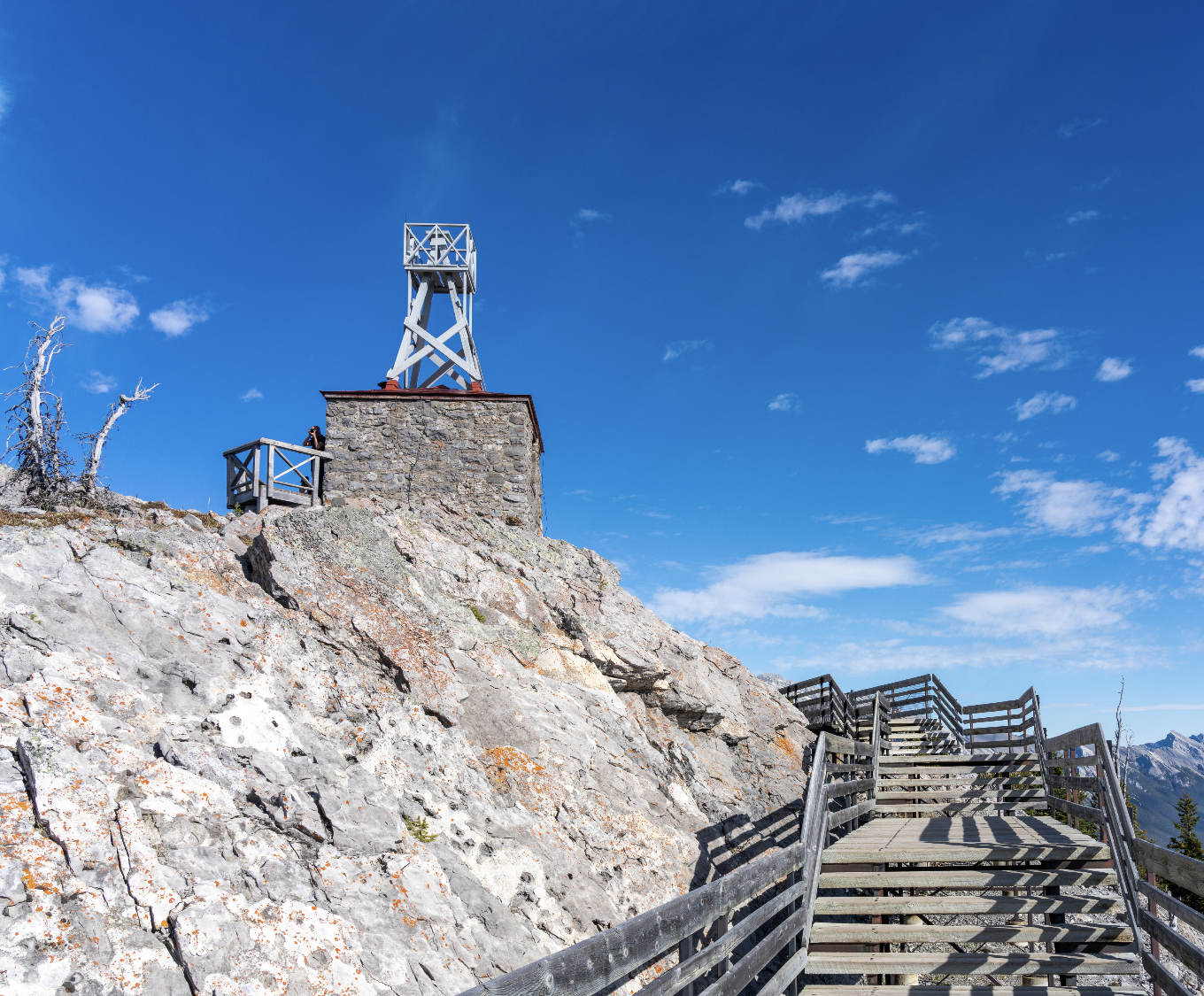

Above the town of Banff along the summit of Sulphur Mountain sits the remnants of a research station that was once one of the top Canadian sites that helped scientists study particles from outer space.
The Sulphur Mountain Cosmic Ray Station National Historic Site of Canada was built in 1956 and played a major role in the International Geophysical Year (1957-1958), a massive global research effort. During that period, scientists from dozens of countries worked together to better understand the atmosphere and celestial activity.
One of the main things those researchers were focused on were cosmic rays—high-energy particles from space that strike the Earth’s atmosphere—and how those rays affect the planet.
Sulphur Mountain was chosen as one of the locations for this research because of its high altitude (2,383 metres above sea level), which made it one of Canada’s most important observation points for the IGY research.
While it was originally built by the National Search Council of Canada and then taken over by the University of Calgary from 1960 to 1978, the station was closed and dismantled in 1981. In 1982, it was designated a National Historic Site of Canada.
Today, visitors can enjoy a quick, mostly paved walking trail from the top of the Banff Gondola to see the site’s concrete foundation and traces of the old road. In addition to providing incredible views of the town of Banff, the site also tells the story of a moment when a quiet mountain in Alberta was part of a worldwide scientific quest.